The Period Costume Trap: Old-Fashioned Is Not the Same as Designed
Period costume feels convincing when silhouette, texture, and visual language work together, helping you tell character-specific design from surface aging.
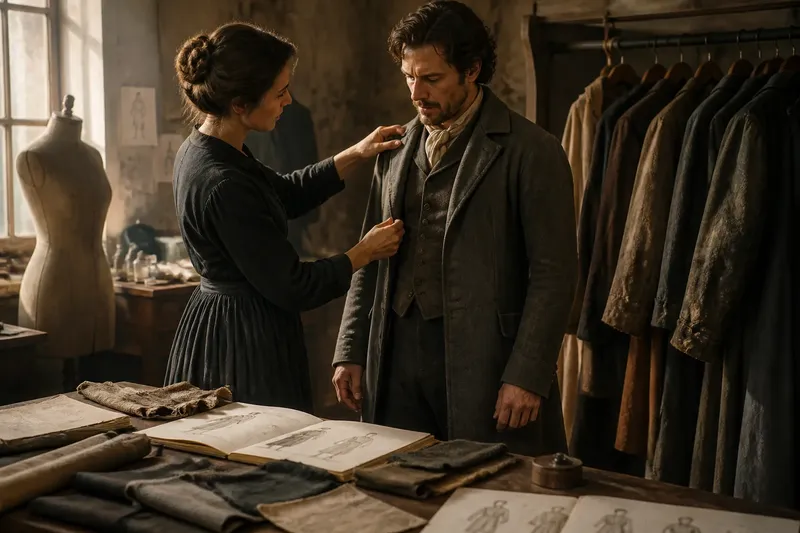
The common mistake in judging period costume is to treat visible age as proof of convincing design. A frayed cuff or faded coat can suggest use, but it cannot make a garment feel right for its wearer or the film’s way of seeing. Look instead at how shape and material help a character move, work, and occupy the frame.
Why doesn’t “old-looking” settle the question?
Distressing, tarnish, and softened color imply wear, but they say little about a garment’s fit, use, or social meaning. A coat can look battered and still seem wrong if its stiff collar restricts movement or its glossy surface catches the light like a contemporary costume piece.
Imagine a fictional costume designer dressing a merchant for a restrained period drama. She starts with a carefully worn coat whose broad lapels pull the eye toward the actor’s chest; she swaps it for a narrower, more pliable coat in a matte wool-like material. The expected result is a less distracting outline and a softer response to movement, even though the replacement looks less battered.
Ask what the garment tells us about the person: how they earn a living, care for their clothes, or carry themselves. Those clues matter more than a general impression of age.
How closely should costume follow period dress?
A historically attentive garment can help viewers recognize a setting and distinguish social roles. Its proportions, closures, and layers may provide useful clues, but a costume does not need to reproduce every detail to feel credible on screen.
Close historical reference suits films that invite viewers to notice period conventions. Its limitation is that detail can become the point of the scene, drawing attention from character and action. A designer may keep the features that shape the wearer’s outline or social position and simplify details that do not read in the frame.
What can fabric texture communicate?
Texture offers information beyond visible wear. Brushed wool, crisp linen, glazed leather, and loosely woven cloth catch light differently and suggest different uses and levels of care.
In a close shot, a collar that has softened at the fold can suggest repeated wear without calling attention to artificial distress. In a scene built around movement, a sleeve’s drag or swing may reveal whether a garment feels weighty, loose, or restrictive. Texture works best when it relates to the character’s circumstances rather than serving as decoration alone.
When does stylization suit period clothing?
A film may enlarge a shoulder, simplify a pattern, or shift a familiar proportion to create a heightened, dreamlike, or satirical effect. These choices can still orient viewers to a period if the costume retains recognizable cues, such as a characteristic collar or a specific way of layering.
Stylized clothing is less persuasive when every garment follows a different visual logic. Repeated shapes or materials give viewers a basis for reading the departures as deliberate, without requiring the costumes to resemble a museum display.
How do silhouette and fabric shape a scene?
Silhouette is easiest to read across a room; texture becomes clearer as the camera moves closer. A distinct outline can identify a character in a crowd, while a close shot reveals the condition and handling of the fabric.
The two cues need not agree. A stiff, imposing outline in soft, worn cloth might make authority seem less secure; a modest shape in sharply finished material might suggest discipline. Their effect depends on the action and the way the garment moves: a coat that swings loosely can soften a turn, while a rigid hem can make the same movement look controlled.
Which clues help you read period costume?
- Outline: Check whether the shoulders, waist, or skirt shape alter the character’s proportions. If the shape supports the role, read it as a deliberate character cue; if it obscures movement, consider how the cut restricts the performance.
- Surface: Check whether the fabric is matte, crisp, brushed, or glossy. If its response to light suits the scene, read it as a material choice; if it pulls attention from the action, note the mismatch.
- Wear: Check whether softened edges or scuffs appear where use would plausibly affect the garment. If wear supports the character’s routine, read it as lived-in detail; if it is scattered without purpose, treat it as decoration.
- Movement: Check how sleeves, hems, and layers respond when the wearer turns or walks. If they move in a way that suits the action, the garment supports the scene; if they fight the movement, the cut or material may be working against it.
- Closures and layers: Check whether buttons, ties, and visible layers make sense for the character’s role in the scene. If they aid the reading of the costume, notice how they contribute; if they crowd the image, look for detail that has little visual purpose.
- Camera distance: Check whether fine details remain legible in close shots and whether the overall shape reads in wider ones. If both scales work, the costume serves the scene across shots; if one fails, consider whether the design favors texture or silhouette.
What questions help you read period costume?
Does historical accuracy always make a costume convincing?
No. Period details can orient the viewer, but the garment still needs to suit the character’s movement and the film’s tone. A historically recognizable coat may feel distracting if it overwhelms the actor’s performance.
Why can a worn costume still feel contemporary?
Wear suggests use, while proportions and surface suggest a design era and style. If those cues conflict, distress alone may not persuade the viewer.
What should you notice first in a costume scene?
Start with the outline and how it changes the character’s shape. Then watch the fabric as the person moves and notice which details emerge when the camera comes closer.
Can stylized clothing still feel rooted in a period?
Yes. A film can alter proportions or simplify patterns while retaining recognizable cues that orient the viewer. Repeated choices in shape or material help the alterations feel intentional.
Why do some period costumes feel designed?
A designed costume gives the viewer specific information about a person, not just a general impression of age. Its outline can affect how the character occupies a room; its fabric can hint at use, care, or restraint.
When you read period costume, look beyond the patina to the shoulder edge, the movement of a sleeve, and the way a collar holds its shape. These small clues can reveal whether the garment belongs to the character’s life—or merely borrows the appearance of the past.