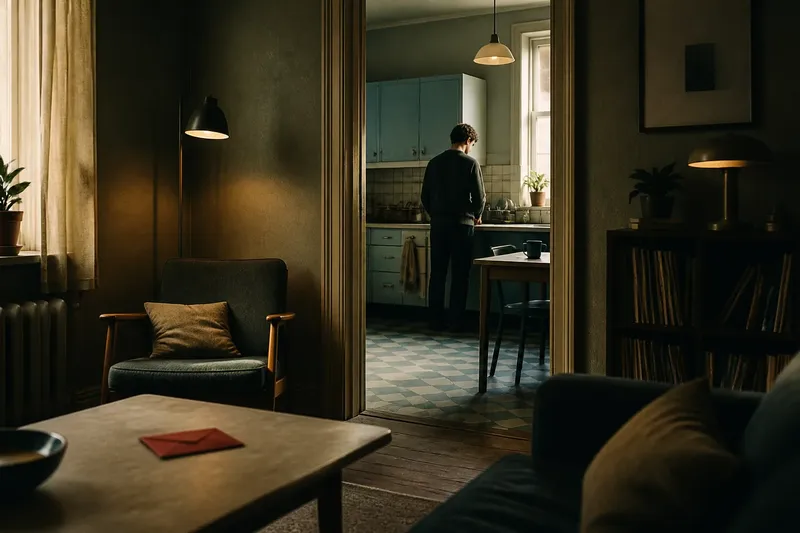
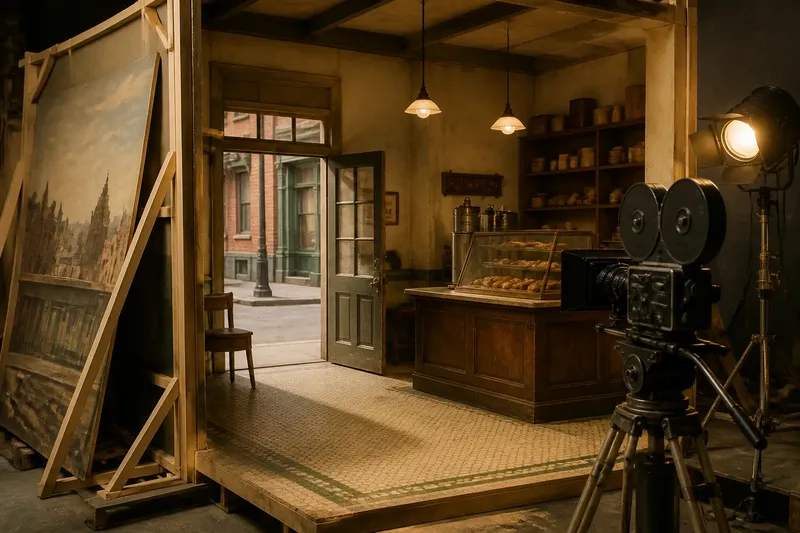
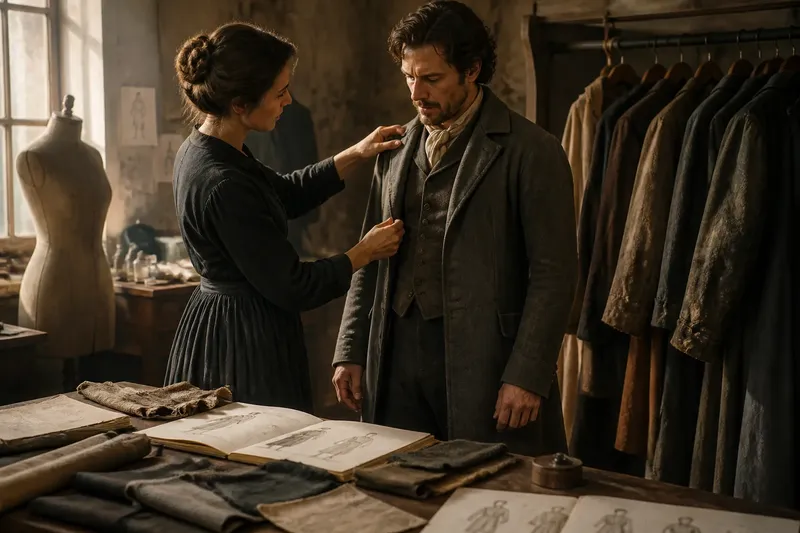
Soft Window Light or Hard Side Light? How to Read a Scene’s Shadows
Soft window light or hard side light changes how faces, rooms, and objects read. Learn to distinguish shadow edges, light direction, and the tools shaping a scene.
The most common mistake when comparing soft window light and hard side light is judging brightness alone. A pale face can still sit in sharply directional light, while a dim room can be evenly illuminated; miss the shadow edge and you miss the scene’s visual structure.
Softness describes how gradually light changes into shadow, while direction describes where it seems to come from. A window can produce either quality, and a hard source can come from the side, above, or nearly anywhere else. To read the image, look at the edges on faces and surfaces, then trace how those shapes organize the frame.
What makes window light soft?
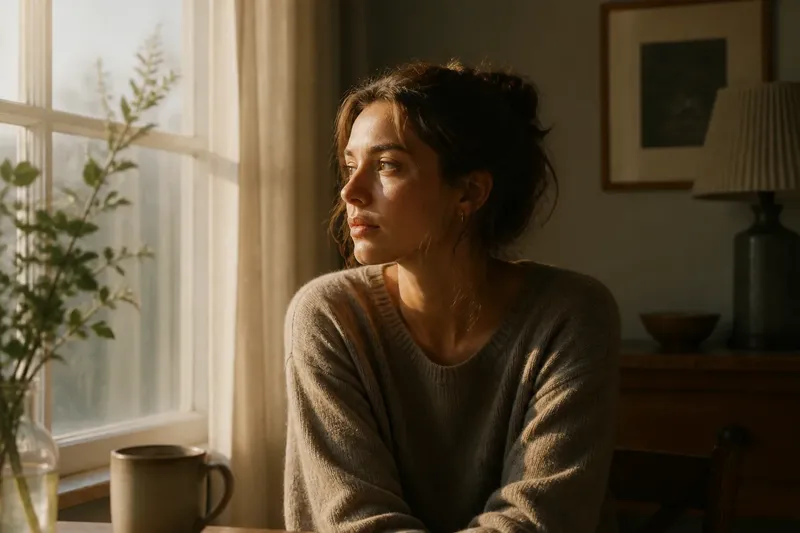
Light looks soft when it reaches a subject from a broad apparent source. A large window, an overcast sky, or a sheer curtain can spread illumination across a face and blur the boundary between lit skin and shadow. The shadow remains, but its edge appears gradual rather than sharply cut.
The window need not be the actual source used on set. A cinematographer may place a large light outside the frame or bounce light from a white surface to create a similar effect. What matters on screen is the apparent size, direction, and quality of the illumination.
Soft window light can preserve detail across a face. The cheek turned away from the window may shift gently into shadow instead of dropping quickly into black. That transition keeps attention on subtle expression and lets the face sit more quietly within the room.
What makes side light look hard?
Hard light comes from a comparatively small apparent source and produces shadows with distinct edges. When it strikes a face from the side, one cheek may be bright while the other falls into a clearly defined shadow. A nose can cast a sharp line, and the brow may form a dark shape over the eyes.
Hard side light reveals texture and shape: skin, fabric weave, scratches, and the contours of a room become more distinct. The lit and shadowed portions of a face can read as separate planes, especially when the composition keeps both visible.
Direction changes where those shapes land. A hard source near the camera can leave facial contours relatively flat; move it to the side, and the nose, cheek, and jaw cast more visible shadows. A scene’s look comes from the combination of softness and angle, not from either quality alone.
How can you tell which quality a scene uses?
Start with the transition around a face’s nose and cheek. A crisp boundary suggests hard light; a gradual transition suggests soft light. Then compare those shadows with highlights on nearby surfaces, which may make the direction easier to see than skin does.
Brightness is a poor shortcut. Exposure can make soft illumination look intense, while a hard source can remain dim. A visible window also does not settle the question: it may be part of the set while another source shapes the actor’s face.
- Shadow edge: If the edge on a cheek or wall is crisp, describe the light as hard; if it fades gradually, describe it as soft.
- Facial contours: If the nose or jaw casts a distinct shape, note directional light; if the shadow wraps around the contour, note a broader transition.
- Other surfaces: If a chair, sleeve, or wall shows the same sharp boundary, treat it as evidence of hard light; if not, compare another surface before deciding.
- Highlights and shadows: If both suggest one consistent side or overhead source, describe that direction; if they conflict, call the source uncertain rather than assigning one.
- Background: If the wall shares the face’s illumination, describe the light as spreading through the space; if it falls into a separate bright patch or darkness, note the separation.
- Visible window: If the face’s shadows align with it, describe the window as a plausible source; if they do not, distinguish the window in the frame from the light shaping the face.
Say you are watching a quiet conversation beside a large window. The face has a gradual shift from lit cheek to shadow, while the wall behind it stays evenly subdued; you describe the image as soft, shaped window light. If the same face instead has a crisp nose shadow and a sharp bright strip on the wall, you describe a harder, more directional quality, even though the window remains visible.
Why use soft light in one scene and hard light in another?
Soft light can keep attention on expression rather than on a pronounced shadow pattern. Its gradual transitions may also connect a person to the room, allowing clothing and walls to remain legible without outlining the figure in a sharp boundary.
Hard side light makes divisions and contours easier to see. A lit profile against a dark room separates the face from its surroundings; a hard strip across a table makes the object’s shape prominent. The useful question is what the light directs your eye toward: a change in expression, a boundary, or a surface.
Filmmakers can combine qualities. A face might receive soft illumination from the front while a narrow hard source marks the hair or shoulder from behind. In another setup, a hard beam may cross a room while softened fill keeps an actor’s face readable. The frame’s visual structure comes from how these sources interact.
How do curtains, bounce, and fill alter the image?
A sheer curtain scatters direct daylight and can soften shadow boundaries. A heavier curtain may reduce or block the source, changing where light falls. Colored fabric can tint the illumination, so the curtain itself may affect both its quality and appearance.
Bounce redirects light from a surface. A white card or pale wall can return light into a shadowed area, reducing the contrast between the bright and dark sides of a face. Black fabric or a dark flag can absorb or block reflected light, preserving deeper shadows.
Fill light is added illumination that lifts shadows without necessarily erasing them. Restrained fill can keep a face readable while retaining a strong side-lit shape. More fill softens the contrast between the sides of the face, even if the main source remains hard.
What questions help you read light in a scene?
Does a soft source always look natural?
No. Broad, smooth illumination can feel stylized if it comes from an unexpected direction or leaves the rest of the room unusually dark. Judge how it relates to the visible space and the other light in the frame.
Can hard light still flatter a face?
Yes. Its effect depends on angle, contrast, and what the shot makes visible. A hard source can emphasize a profile, while a different angle may draw attention to details that are less prominent in the scene.
Is every bright patch from a window sunlight?
No. A bright patch may be created or shaped with lights, reflectors, flags, or a combination of them. Describe what the image suggests without claiming to know the equipment used off camera.
How can I describe a scene when the source is unclear?
Describe visible evidence before naming a source: “The cheek shadow has a sharp edge, and the light seems to come from camera left” is more precise than “It is sunlight.” This keeps the description grounded in what the frame actually shows.
How can you compare light on a rewatch?
Choose one scene and compare the shadow edge on a face with the edge on a nearby wall or piece of furniture. Note whether the light fades gradually or cuts across each surface, then trace the highlights and shadows to describe its apparent direction.
For instance, imagine a viewer pausing a scene in which a character sits beside a window. They note a soft cheek transition, a sharper line on the table, and a wall that remains dim; their description becomes “soft light on the face, with a harder directional accent on the table,” rather than forcing the whole frame into one category. That distinction makes soft window light or hard side light easier to identify without treating either as a mood label.